New post
Avatar
0

I find this topic really confusing and I haven't come across it too often in scores.


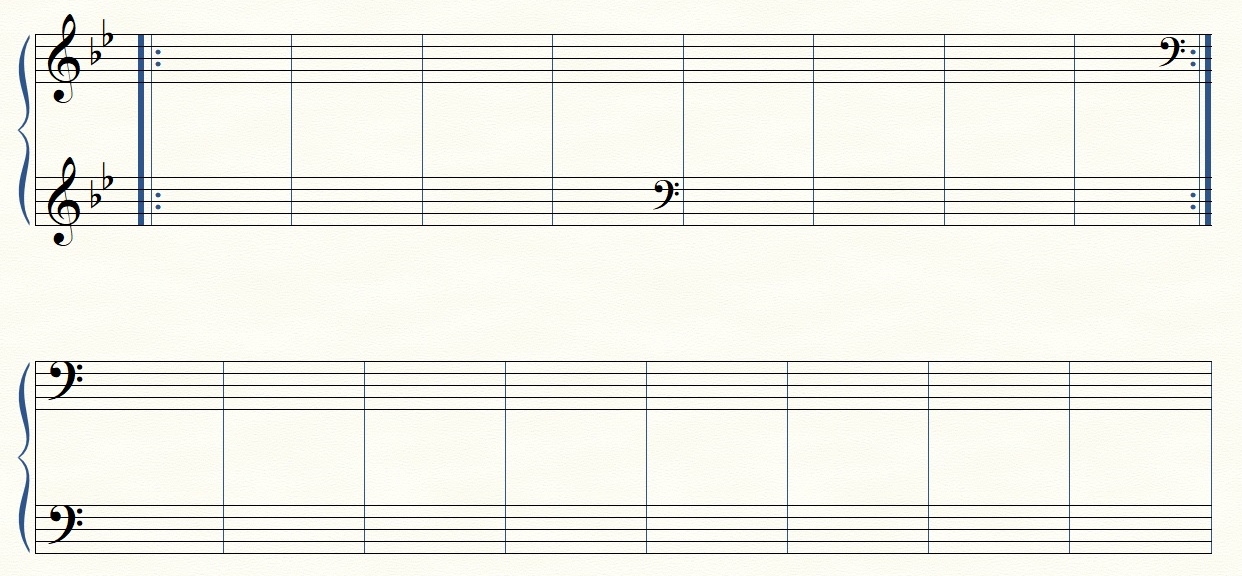
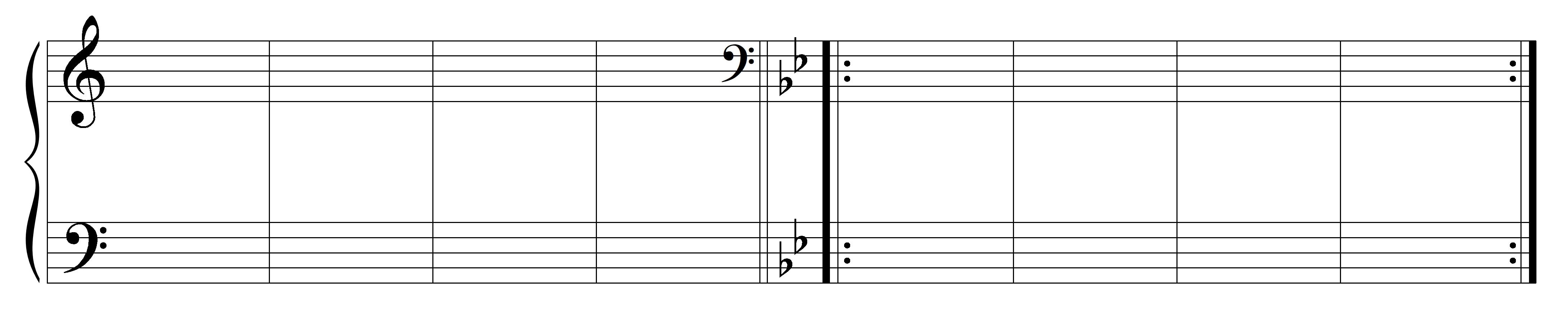
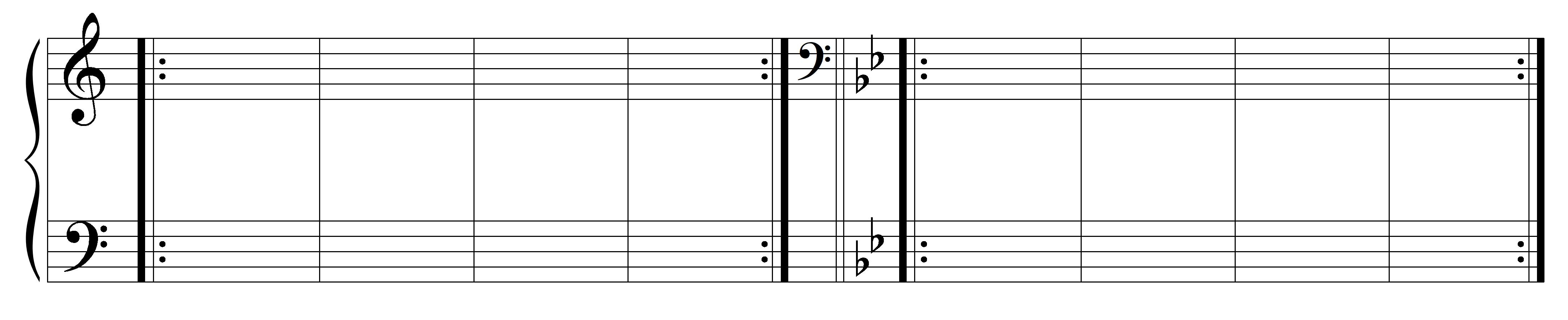
Here's a basic situation:

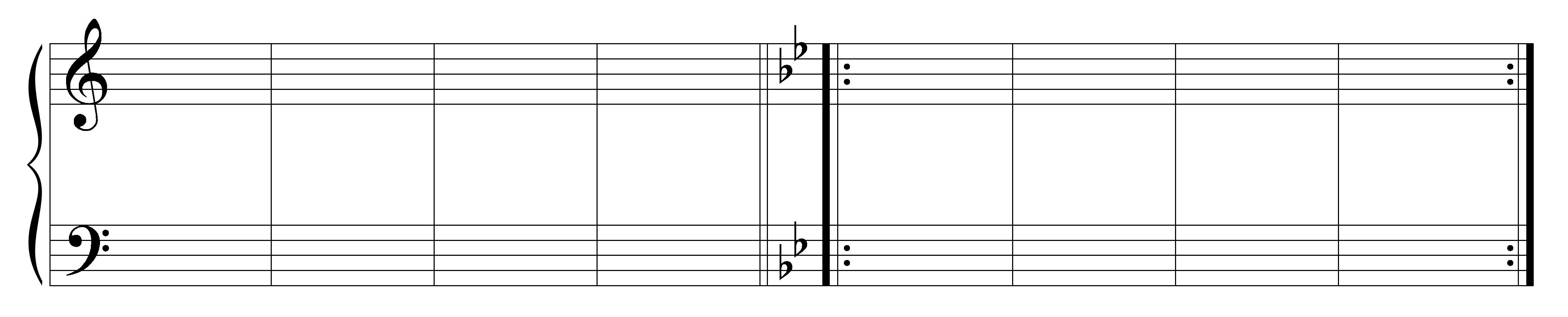
Music begins with both staves in treble clef.

Bottom staff is changed to bass clef mid-way through the repeat section.

Both Staves change to bass clef after the repeat, ending a system.


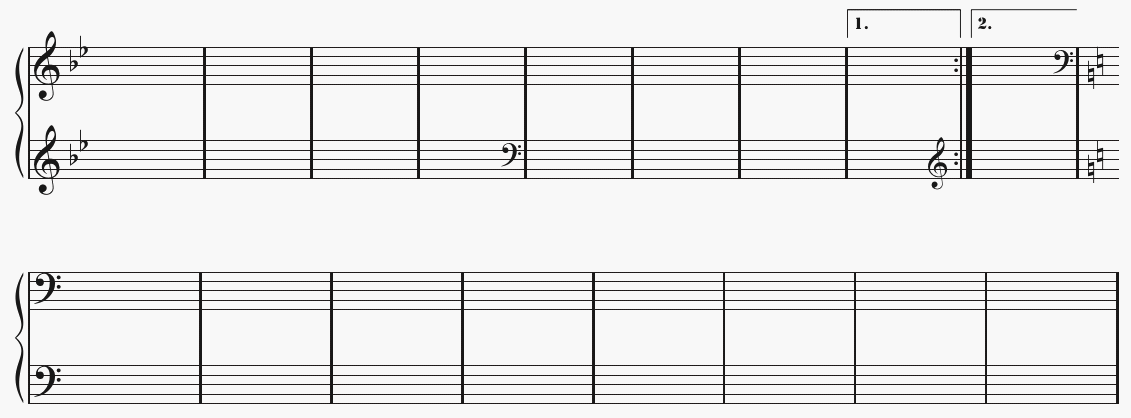
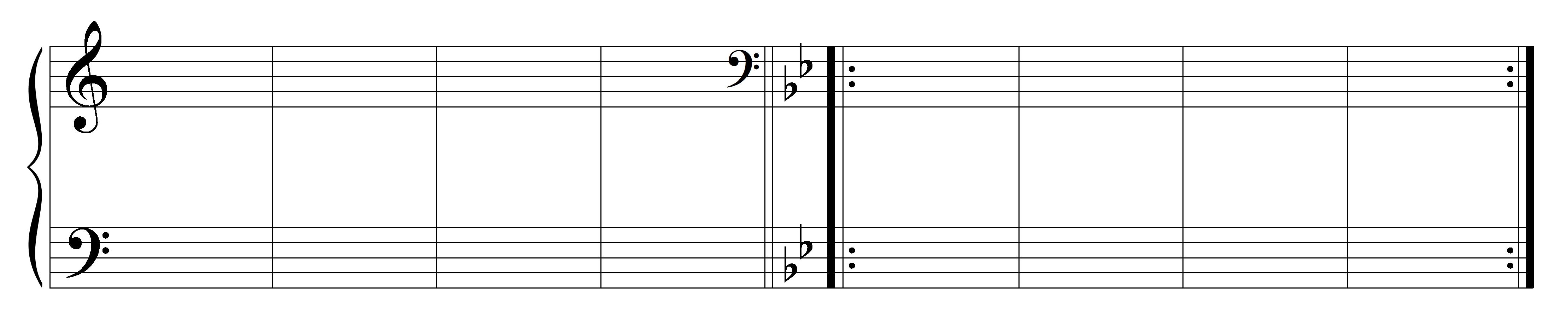
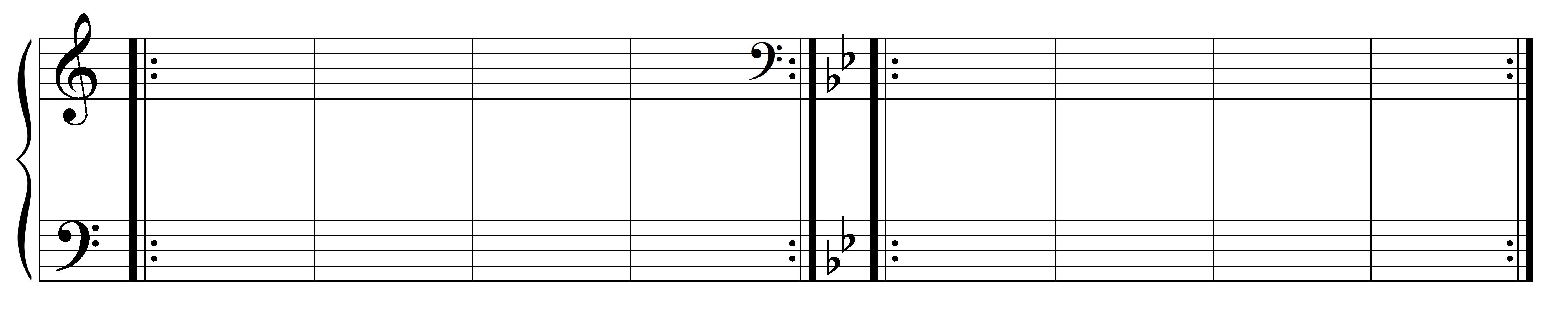
What I have seen done before is a courtesy clef preceding the backward repeat sign, reminding the performer that the top of the repeat is in the treble clef.


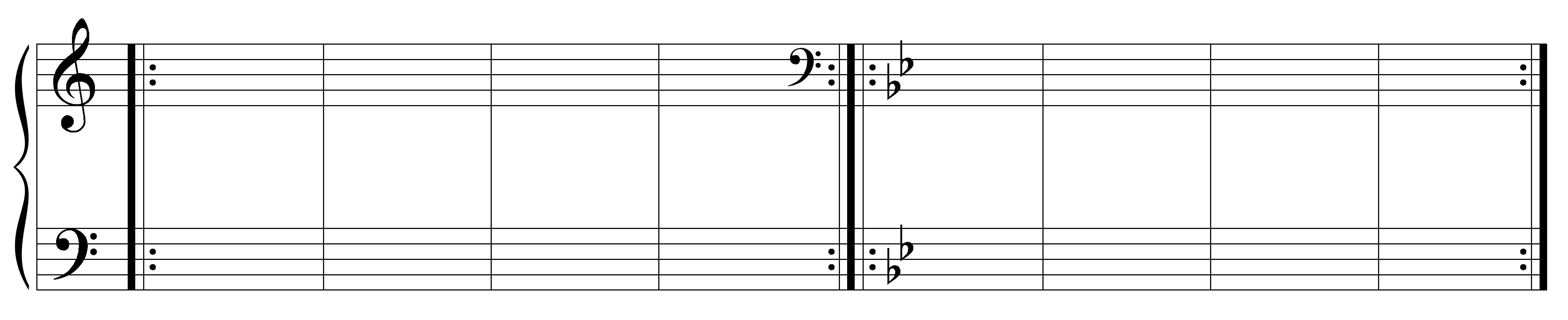
But, what to do about courtesy clefs for the system following the repeat at the end of the line?

A:

B:
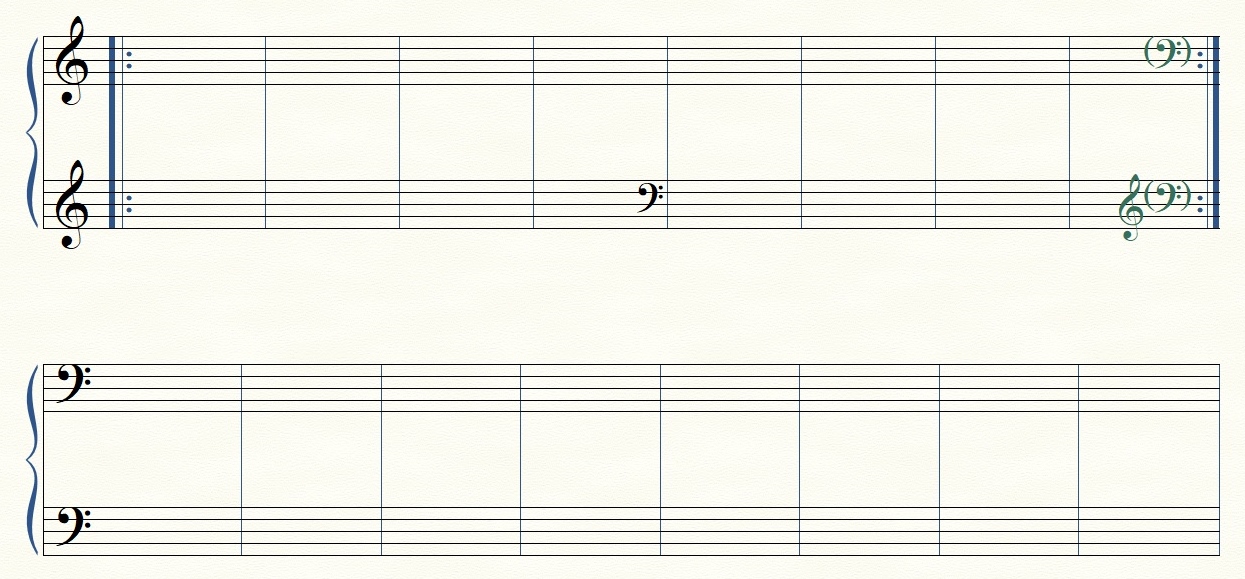
Or perhaps reverse B so that the treble clef is in parentheses and the two courtesy bass clefs for the next line remain normal ... ?


It gets even more complicated with more elements added. I'm not sure if the following example could be considered correct.

17 comments

Date Votes
Avatar
0

I am not sure I understand.

What is your question?

All the layouts shown in your post can be done in Finale.


You can get what you need, but you must tell us what you need.

If you do not tell us what you need, we can not know it.

Comment actions Permalink
Avatar
0

Oh, I thought it was clear. I want to know which is correct according to notation standards. The thing is, I'm not sure if Finale handles this correctly using the appropriate tools. For example, for a clef change beginning a system after a repeat section, the courtesy clef is placed before the backward repeat. So, should it be placed here or is this reserved for courtesy clefs when the current clef is different from the beginning of the repeat section?


Finale Default Functionality:


I ask because this gets very confusing. Also because if the default isn't correct, then the casual user who possibly doesn't know much about notation wouldn't really think much of it and think that Finale does everything correctly. There are a number of instances where Finale doesn't handle things according to standard and expects the user to know what it should be. So, depending on the feedback (if any), perhaps this is something MakeMusic should revisit.


(P.S. I did create the examples in the OP, if that wasn't clear either.)

Comment actions Permalink
Avatar
0

The attached graphic shows the layout Elaine Gould recommends in “Behind Bars”.


Quoting Elaine Gould:


“When a clef, key signature or time signature changes during a repeated passage, it must be reinstated for the repeat. Create a first-time bar for this information.”

Comment actions Permalink
Avatar
0

This is interesting. Creating first and second endings seems a bit much if the music is the same. This solution seems evasive to me. It might be better to not even include a cautionary clef for the top of the repeat. If that's the case, then the Finale default would be correct. However, is placing the cautionary/courtesy clef before the backward repeat (within the repeat) clear enough that this doesn't mean that it is cautionary for the top of the repeat, but rather for the next line? Should there be, or is there, a difference between the two with respect to placement?


I was doing a bit of research today in the Gardner Read and Ted Ross books. I have more examples to post ... which I'll probably do tomorrow.

Comment actions Permalink
Avatar
0

But the music is not "the same" — if one refers the the "music" as the printed page and not the sound. It might be better to move the last measure or two to the next system.


Comment actions Permalink
Avatar
0

… is placing the cautionary/courtesy clef before the backward repeat (within the repeat) clear enough that this doesn't mean that it is cautionary for the top of the repeat, but rather for the next line? Should there be, or is there, a difference between the two with respect to placement? …


The following two examples show the layouts Elaine Gould recommends in “Behind Bars”:

In short:

1) A {repeat end} change is placed at the end of the repeated section (= before the Backward Repeat Bar) if the change applies to both the beginning of the repeated section and the passage that follows the repeat.

2) A change that affects the music only after a repeat, goes after the Backward Repeat Bar.

Comment actions Permalink
Avatar
0

Ok.


So if those two scenarios were to coincide ....


Comment actions Permalink
Avatar
0

Finale Defaults:


Ex. 1:

Ex. 2:

Ex. 3:

Ex. 4:


Ex. 5:

Comment actions Permalink
Avatar
0

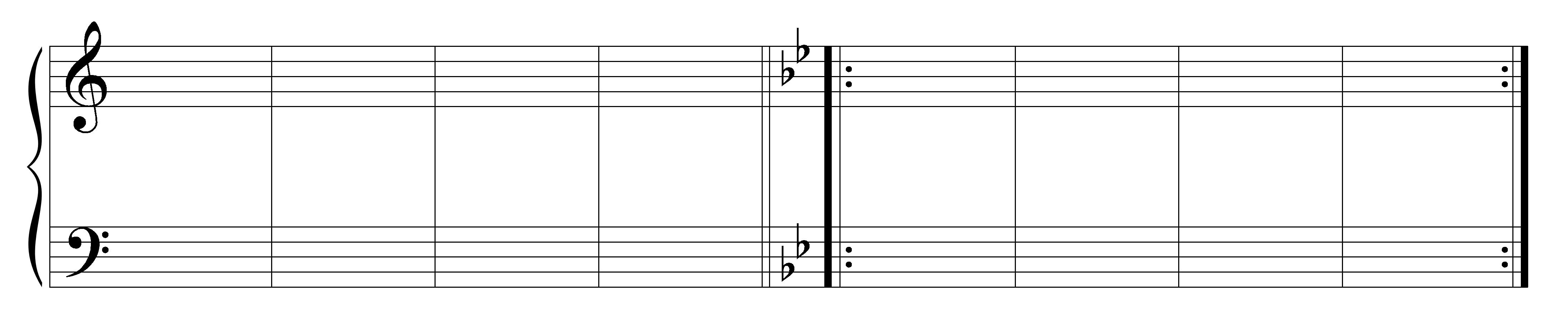
If a Repeat Sign/Bar Is a Barline ...

I don't have the Elaine Gould book (I might get it for Christmas), but I was told that she refers to repeat signs as barlines, which is contrary to what Read and Ross say. So, if repeat signs are barlines ...


Ex. 1


Ex. 2


Ex. 3


Ex. 4


Ex. 5


I find Ex. 4 confusing (even Ex. 5 seems unclear). Perhaps this would be clearer ...


In any case, Read and Ross consider this interpretation of a repeat sign incorrect.


Comment actions Permalink
Avatar
0

... Not a Barline

According to Gardner Read and Ted Ross, a repeat sign, or bar, is not considered a barline.


"...a time[key] signature usually follows a bar line. A repeat bar is not considered a bar line although at times it serves the purpose."

-Ted Ross, p. 168


"If a clef change affects an entire measure, the change is made ahead of the barline of the measure to be changed. (A barline never precedes a clef sign unless it is a systemic barline.)

-Ross, p. 167


"Although the repeat bars ... coincide with barlines, they must not be thought of as synonymous with barlines. They may occur within a measure and on any beat--even bisecting a beat ... Occasionally the single thin line of the repeat mark (the barline proper) is omitted ... but this practice is not recommended.


"When a change of meter of key signature comes at the beginning of a section to be repeated, the change is indicated on the staff before the position of the first repeat-bar ... The notator must once again observe that repeat signs are not actually barlines, and so do not follow the same rules of notation."

-Gardner Read, pp. 226-27


Interestingly, they both seem to be silent on the issue of clef changes and repeat signs (at least, I didn't notice anything about it). But, if we apply logic to the rules then ....


Ex. 1

Ex. 2

Ex. 3

Ex. 4

Ex. 5


So, if a repeat sign is not a barline and a barline must never come before a clef sign when the change affects an entire measure, then a barline should be drawn when a clef change comes after a repeat section.


A:

B:

Comment actions Permalink
Avatar
0

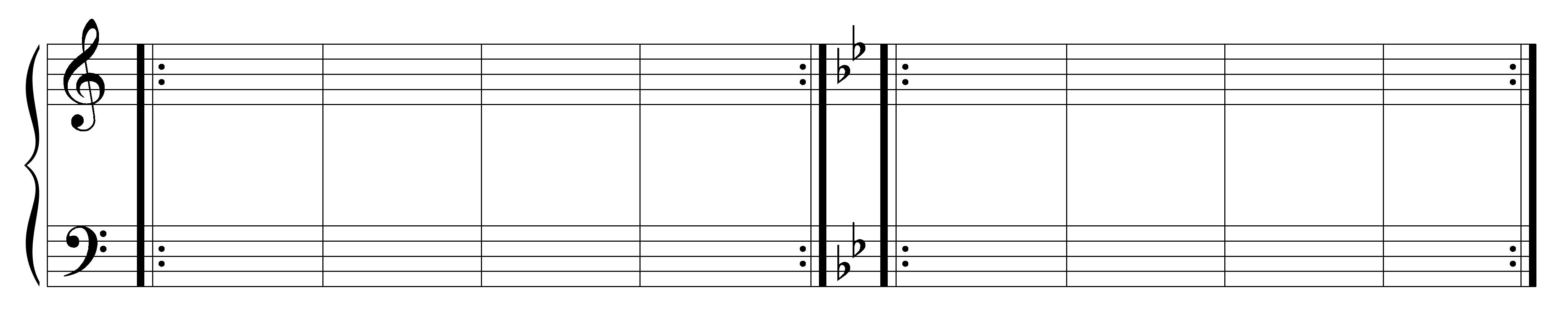
Elaine Gould does not say that repeat marks are barlines.

As a matter of fact she says that they may be placed “at any point” (p. 233).

She also says “At a conventional barline, they replace it”.

Here are the 5 examples as Gould recommends them:

Comment actions Permalink
Avatar
0

If that is the case, then I was misinformed. But in Ex. 1, if a repeat sign replaces a conventional barline, then shouldn't the key signature change be placed after the forward repeat since key/meter changes go after the barline?

Comment actions Permalink
Avatar
0

… But in Ex. 1, if a repeat sign replaces a conventional barline, then shouldn't the key signature change be placed after the forward repeat since key/meter changes go after the barline? …


I am just the messenger.

Elaine Gould says (but you may disagree with her):

(p. 234) “Where there is a new clef, key signature or time signature at the beginning of a repeated section, place the repeat marks afterwards”

Comment actions Permalink
Avatar
0

Sorry if it came off that way. I'm not questioning you but "rules" ... if any exist, really. The Read/Ross treatment seems fairly understandable and logical. Although, I don't know if drawing a barline for a clef change following a repeat section is "correct" as they don't say anything about this specifically--probably deliberately, but it's where the logic is leading. (I may have seen this somewhere before ... but I can't be certain.)


The Gould treatment is ... understandable, but inconsistent. On the one hand she says repeat signs replace barlines ... but there are special rules you should follow that don't apply to barlines. Whereas Read and Ross say that they are not barlines but coincide with them (because, where else are you going to put a repeat sign?) in general repeat situations. This doesn't take the barline out of the equation but makes it something to consider when changing key/meter or clef--that the barline still exists and is separate from the repeat bar (in which case, they do not necessarily coincide/overlap). 


Finale (and Sibelius) do exactly what Read prescribes when a key/time change begins a repeat, but clef changes don't follow the same line of reasoning.


You (Peter T.) are probably the most experienced Finale user out there (and I appreciate your engagement on this topic), so ....

  1. What do you think of Finale's functionality in comparison to both Gould and Read/Ross?
  2. Also, do you think Finale should accommodate both of these different treatments as a "Document Options" setting?
  3. Should there be options for displaying cautionary clefs at the end of a repeat when the current clef and beginning clef are different?
Comment actions Permalink
Avatar
0

I do not really have an opinion on what repeat options should be included in future Finale versions, sorry!


The difficult problem is, figuring out, exactly how a future Finale version should work, so that it is as versatile and user friendly as possible.


Generally I am not against having options in Finale.

Comment actions Permalink
Avatar
0

ok. that's reasonable.


But, do you think that there could be some improvement in how clef changes work with repeat bars and key/meter changes?

Comment actions Permalink
Avatar
1

… do you think that there could be some improvement in how clef changes work with repeat bars and key/meter changes? …


Yes, I do.

Generally I can get the repeat layout I need.

But it may require a workaround.

It Would Be Nice If it somehow were easy to put clefs, key signatures, time signatures, barlines, repeat marks - in any order you might need.

Comment actions Permalink

Please sign in to leave a comment.